I am very closely connected with nature – plants, animals, and children. So are most Highly Sensitive adults and children. Remember that feeling of being at peace, with the wind on your skin and being absorbed in green? I lived on a farm with rescue donkeys, cats and ducks for many years, and I still grow my own food, collect rainwater and notice the daily and seasonal changes.

We need to remember we are part of nature
My Philosophy
We are living, breathing, sensing human beings. Our bodies are constantly responding to the world around us — to light, sound, temperature, movement, other people, stress, safety and connection.
Our children are no different.
We sometimes talk about children as though they are machines that need to be taught, managed, corrected or fixed when something isn’t working as we expect.
But children are not machines.
They are bodies, beings, nervous systems, emotions, relationships and developing human beings, constantly responding to their environment.
When we remember that, behaviour starts to look different.
A child who is melting down isn’t simply giving us a hard time.
A child who can’t sit still isn’t necessarily choosing to be difficult.
A child who suddenly shuts down may not be refusing to cooperate.
Something may be happening in their system.
And before a child has the words to tell us what is happening, their body may already be telling us.
That is where my work begins.

Children love growing food
Parenting begins with the nervous system.
I believe children are communicating long before they have the words to tell us what is happening.
What we call behaviour is often the visible expression of something much deeper — overwhelm, fear, sensory overload, disconnection, unmet need, or a nervous system that has simply reached its limit.
This doesn’t mean we ignore behaviour. It means we become curious about what is underneath it.
The body often knows before the mind does.
We often think of emotions as something that happens in our minds. But emotions are also physical.
Before a child can say, “I’m anxious,” they may already have a tight tummy, a racing heart, tense shoulders, sweaty hands or an overwhelming urge to run.
Before they can say, “This is too much for me,” their body may already be telling us.
And the same is true for us. We may notice our jaw tightening, our chest becoming tight, our breathing changing, a feeling of heat rising through the body, or the sudden urge to shout.
These sensations can be information.
The body often knows before the mind has found the words.
Learning to notice these signals — rather than immediately overriding them or reacting to them — is part of becoming more aware of the nervous system.
And this is one of the things I want to help parents develop: the ability to become curious about what is happening in the body, in themselves and in their child.
Because sometimes the body is telling us something that behaviour hasn’t yet found a way to say.
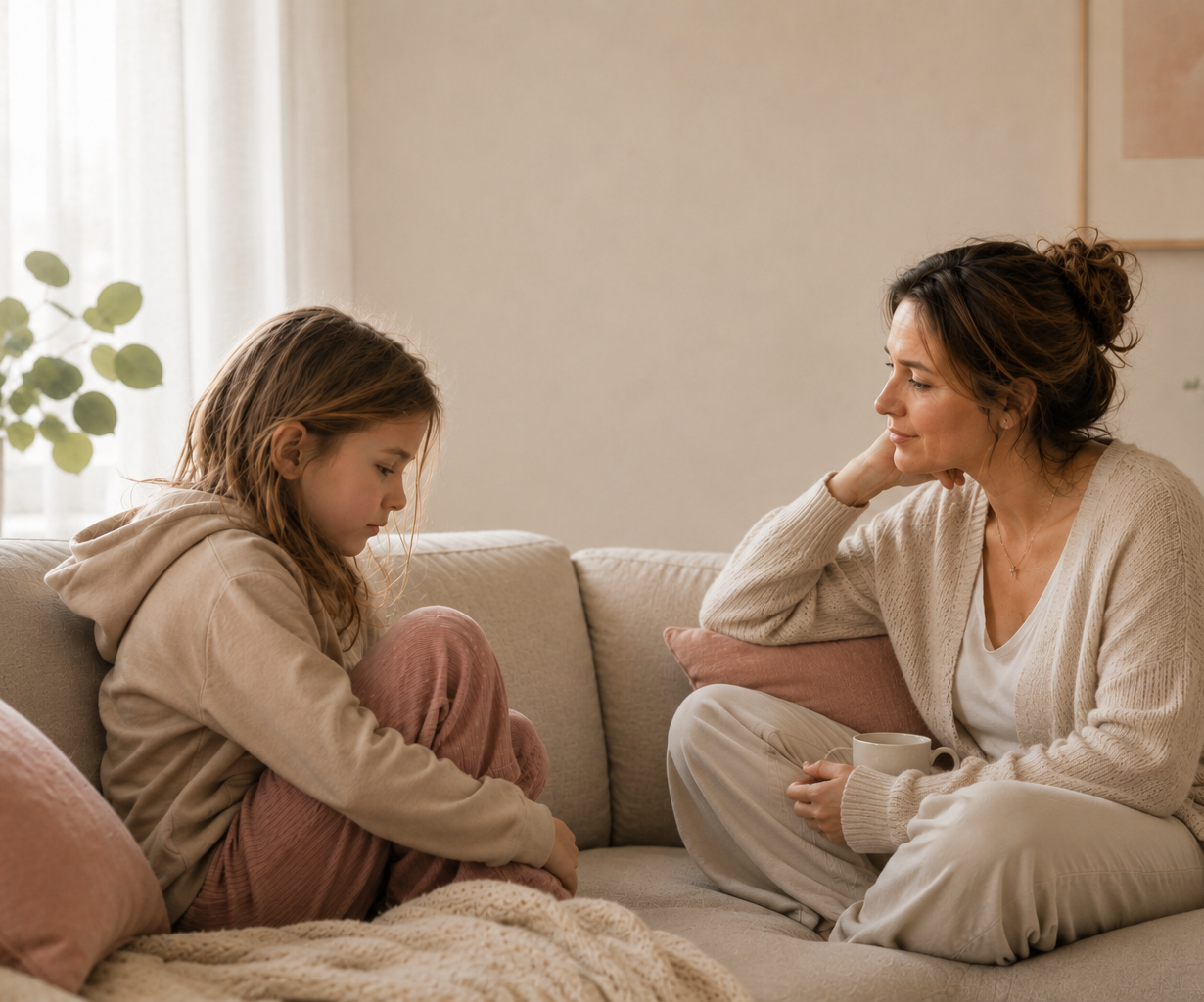
Behaviour is communication.
A child who is screaming. A child who won’t get dressed. A child who refuses school. A child who hits, bites, runs away or shuts down. A child who seems impossibly demanding. A child who can’t seem to listen.
We can ask:
How do I stop this behaviour?
Or we can ask:
What is this behaviour telling me?
That second question changes everything.
It doesn’t mean allowing behaviour that is unsafe or unacceptable. It means looking underneath the behaviour before deciding what a child needs from us.
The nervous system changes the way we see everything.
When a child is overwhelmed, their capacity changes. Their ability to listen, reason, be flexible, cope with disappointment, transition, use language, learn and connect can all be affected.
Sometimes what looks like defiance is a nervous system saying:
I can’t do this right now.
And sometimes what looks like a child who won’t is actually a child who can’t – yet.
This is why I believe nervous system awareness belongs at the heart of parenting. Not as another parenting technique to master, but as a different way of understanding your child.
Connection comes before correction.
This doesn’t mean permissive parenting. It doesn’t mean there are no boundaries, or that children should be allowed to do whatever they want.
Children need boundaries. They need adults who are able to say no. They need consistency, structure and clear expectations.
But a boundary delivered from connection is very different from a boundary delivered from fear, anger or disconnection.
Before we can teach a child to regulate themselves, we often need to help them feel regulated enough to access that capacity.
Connection is not the opposite of boundaries.
Connection is what makes boundaries feel safe enough to be heard.
Children don’t all fit the same mould.
Some children move through the world with enormous sensitivity. Some feel everything deeply. Some notice sounds, textures, smells and changes that other people barely register. Some need far more movement, while others need far more predictability.
Some become completely absorbed in their interests. Some struggle with transitions. Some are intensely emotional. Some are highly intelligent but become overwhelmed by ordinary classroom demands.
Some appear confident at school and fall apart the moment they get home.
And some children simply don’t fit neatly into any category.
I don’t believe our job is to make every child fit the mould.
I believe our job is to understand the child in front of us.

A diagnosis can be helpful.
I want to be clear about this.
A diagnosis can bring enormous relief. It can give a child and their parents an explanation for years of difficulty. It can open doors to support, and it can help a child understand themselves.
But a diagnosis doesn’t tell us everything about a child.
It doesn’t tell us what overwhelms them. It doesn’t tell us what helps them feel safe. It doesn’t tell us what happens when they are rested, connected and regulated.
And it doesn’t tell us what their behaviour is communicating in this particular moment.
So I don’t want us to stop at the label. Because labels don’t facilitate growth and improvement in themselves.
I want us to stay curious about the child.
What if we’re misunderstanding some of our children?
This is an area where I am willing to ask uncomfortable questions.
I see children being described as difficult, oppositional, anxious, inattentive, aggressive or dysregulated. I see children being labelled.
And sometimes I wonder:
What happens when we look underneath the behaviour before we decide what it means?
Could sensory overload be part of the picture?
Could chronic stress be part of the picture?
Could a child who is constantly moving be trying to regulate themselves?
Could a child who appears inattentive actually be overwhelmed?
Could a child who repeatedly loses control be reaching the limits of their nervous system?
Could we sometimes be treating the behaviour without understanding the state that is producing it?
I don’t believe these questions mean we should dismiss neurodivergence or avoid assessment. Quite the opposite.
I believe they mean we need to look at the whole child. And I’m willing to be controversial and go against the tide here for the sake of the children. I have seen children change in ways that once seemed impossible when we begin to work with the body, the nervous system and the relationship. I believe this way of seeing children deserves to be talked about more openly.
A label can be useful. But it should never become the end of our curiosity.
The same is true of children with tics and Tourette’s.
I don’t believe every tic is simply something to be trained out of a child. And I don’t believe that understanding the nervous system means denying neurological differences.
But I do believe there is value in asking:
What makes this child’s system more settled?
What happens when they are tired? When they are excited? When they feel watched? When they feel safe? When there is pressure? When there is time and space to regulate?
Understanding the nervous system doesn’t replace neurological understanding.
It adds another layer.
And sometimes that layer can change how a child experiences their own difficulties. And how they are able to manage them and feel safer.
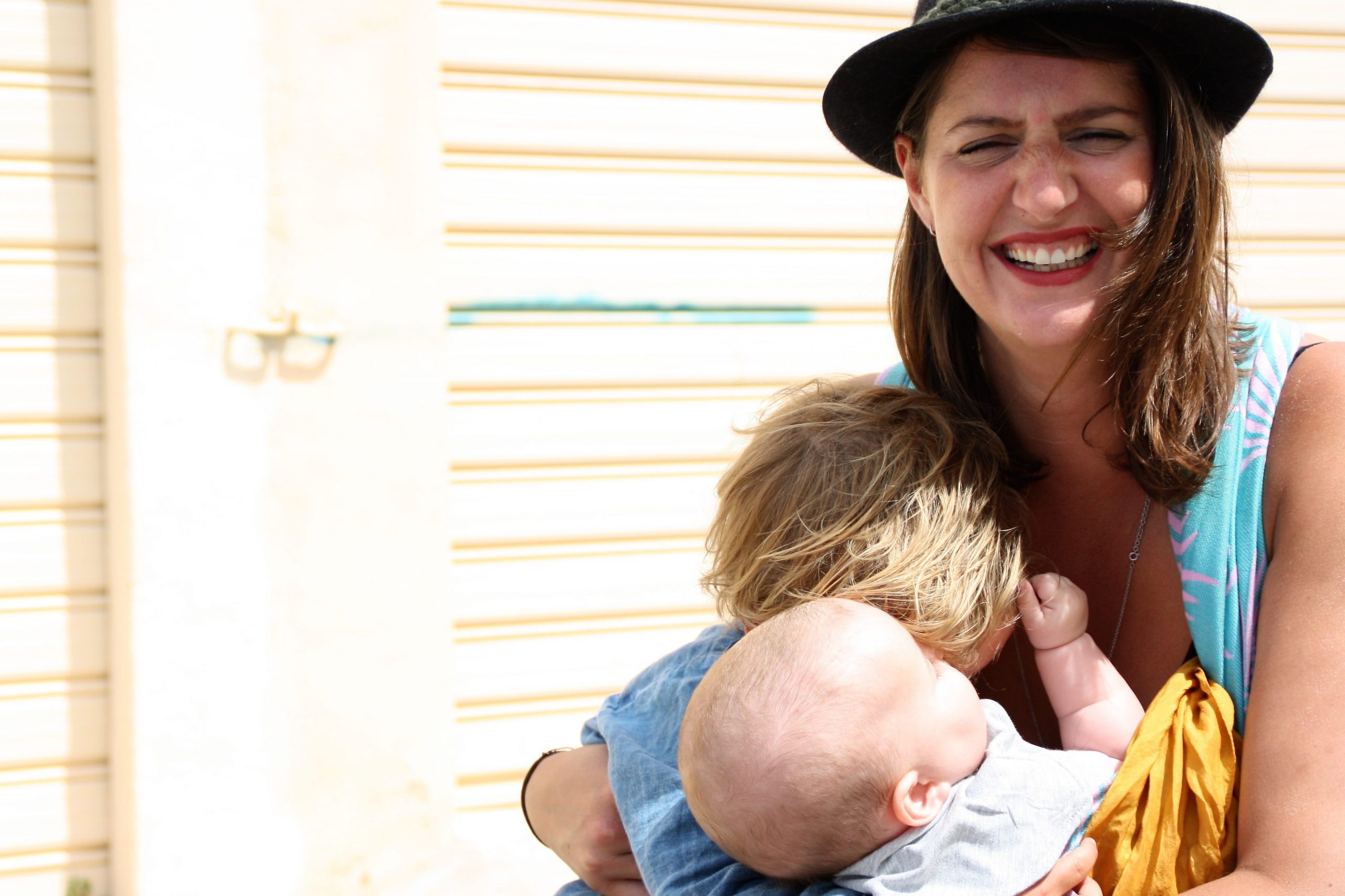
Parents need support too.
This may be the most important part of my work.
Because parenting is not something that happens to us. We are part of the relationship.
Our own nervous system enters the room. Our history enters the room. Our fears enter the room. Our expectations. Our exhaustion. Our triggers. Our ancestry. Our hopes for our children. Our own experiences of being parented.
All of it matters.
This is why I don’t want to give parents another list of things they are doing wrong.
You are already carrying enough.
I want to help you understand what is happening — in your child and in yourself.
Because when we become aware of ourselves, we have more choice.
And when we have more choice, we can respond rather than simply react.
Regulation is not about being calm all the time.
I don’t believe in the idea that a good parent never loses their temper.
We are human. We get tired. We get triggered. We sometimes shout. We sometimes get it wrong.
The goal isn’t perfection. The goal is repair.
Coming back. Being able to say:
“I was overwhelmed. I’m sorry. Let’s try again.”
A child doesn’t need a perfectly regulated parent. They need a parent who is willing to notice, repair and reconnect.
I don’t want to teach you how to control your child.
I want to help you understand them.
There is a difference.
When we understand what is happening underneath behaviour, we often have more choices. We can change the environment. We can change the demand. We can change our response. We can support regulation. We can hold a boundary differently. We can repair the relationship.
We can stop asking:
“How do I make my child behave?”
And begin asking:
“What does my child need in order to be able to do this?”
That shift can change a family.
And ultimately, this is what I believe.
Children don’t need to be fixed.
They need to be understood.
They need adults who are willing to look beneath the behaviour. They need boundaries without shame. They need connection without control. They need space to be who they are.
And they need adults who understand that behaviour is rarely the whole story.
Parenting begins with the nervous system.And when we change the way we see a child, we often change what becomes possible between us.
This is the work I do.
If you’ve been searching for a different way of understanding your child…
If you’re exhausted by strategies that never seem to reach the heart of the problem…
If this philosophy feels like coming home…
I’d love to walk alongside you.